Skiing in Abruzzo – snow report
The most popular ski resorts, the updated snow report and useful information on how to find lifts or book accommodation for your winter holiday


Sulmona lies at about 400 metres in the Valle Peligna, enclosed between Monte Morrone and the Majella. The slopes of Campo di Giove are half an hour away and the Alto Sangro ski area with Roccaraso about forty minutes. This guide covers the mountains, winter and summer sports, monuments, typical dishes, events and practical information for visiting the city and its surroundings.
The most popular ski resorts, the updated snow report and useful information on how to find lifts or book accommodation for your winter holiday

View the webcams in Abruzzo and check real‑time weather conditions. Some webcams belong to www.abruzzoparchi.it, others are located throughout the region
Weather forecasts for the coming days in Abruzzo. Live weather via our webcams and temperatures recorded in several mountain areas
Maps for trekking, mountain biking, ski touring, running and horse riding. You can also download the GPX track of each route
Abruzzo’s villages are famous for their fortresses, mountains and the traditional trabocchi along the southern coast

One of Italy’s most famous and oldest national parks
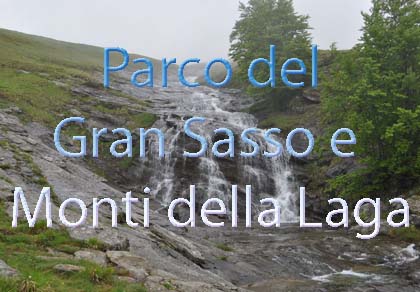
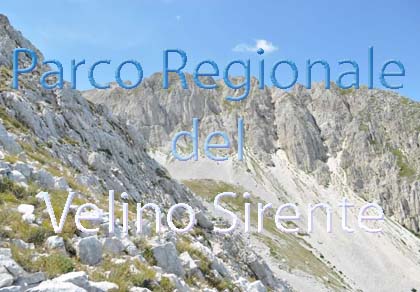
Located in the heart of the Apennines, home to the beautiful villages of the Rocche Plateau
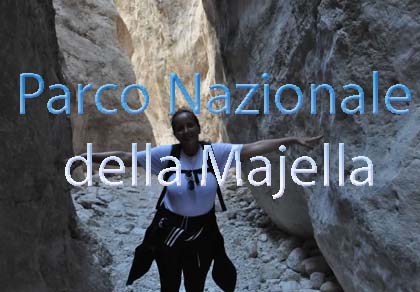
One of the snowiest places in Italy, a unique mountain massif rising close to the sea
Choose between sea or mountains, summer or winter, a sporty holiday or a relaxing one — Abruzzo has it all
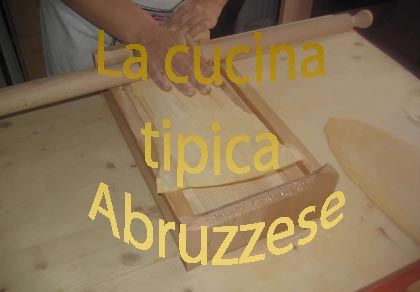
Abruzzo is famous for its cuisine, both mountain and coastal, with traditions that vary from area to area
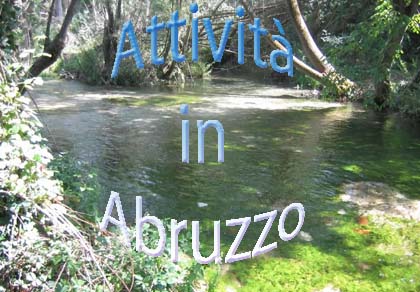
Walks, diving, climbing, mountain biking, horse riding — all outdoor activities available in Abruzzo

Rocca di Mezzo, Rocca di Cambio, Rovere, Terranera, Ovindoli

The Medieval Villages of the Gran Sasso, with their castles, towers, and ancient settlements that once dominated Abruzzo

The village of Cappadocia, in the western part of the Aquilan Abruzzo

The village of Casamaina, a favourite among skiers heading to Campo Felice or Ovindoli

The village of Castel del Monte, the highest settlement in the Gran Sasso area

The village of Civitella Alfedena, in the Abruzzo, Lazio and Molise National Park

Mountaineering on the Gran Sasso, the ideal place for freeride lovers seeking demanding routes

The city of L'Aquila, with its restored Renaissance palaces, a place rich in culture

The 2012 snowfall in L'Aquila brought over one metre of snow in 24 hours — unbelievable images

The village of Pescasseroli, heart of the Abruzzo, Lazio and Molise National Park

The village of Pietracamela, on the north-eastern side of the Gran Sasso, at the foot of Corno Piccolo — a magical and unexpected place

Prati di Tivo, a winter ski resort offering breathtaking views to all who visit

San Domenico and the Serpari ritual, held every first Thursday of May

The 2012 snowfall in Scoppito reached nearly two metres in height

The village of Opi, a splendid settlement in the Abruzzo, Lazio and Molise National Park



Punta Aderci, with the Abruzzese trabocchi stretching from Vasto through Fossacesia to San Vito Chietino


Lake Campotosto, nestled between the Gran Sasso and Monti della Laga ranges, within the national park of the same name

The Capodacqua reservoir, with submerged mills and crystal-clear waters, a paradise for divers

The swimming lake of Scanno, named after the village overlooking it — a place worth visiting

Lake Sinizzo, just a few kilometres from San Demetrio, is the ideal place for nature lovers seeking fresh, clear waters

Lake San Domenico, named after the nearby hermitage; its crystal-clear waters make it unique. Swimming not allowed

The Fountain of the 99 Spouts, a symbol of the city of L'Aquila

The Basilica of Santa Maria di Collemaggio, resting place of Pope Celestine V, the only pope buried outside Rome’s walls

The Sanctuary of Madonna d'Appari, set among the rocks along the road between Paganica and Assergi

The Church of San Panfilo, in the municipality of Tornimparte, with its frescoes — a place worth visiting

The Stiffe Caves, inside the Velino-Sirente Regional Park — a magical place to explore
A city of art surrounded by mountains. From the old town you can see the Morrone and the Majella; in half an hour you are on the slopes of Campo di Giove, and in about forty minutes at Roccaraso, the largest ski area in central and southern Italy.
The Valle Peligna is enclosed by some of the highest peaks of the Apennines.
Sulmona sits in the middle of the Peligna basin. To the east rises Monte Morrone, which tops 2,000 metres right above the city; behind it lies the Majella massif, with Monte Amaro (2,793 m), the second-highest peak in the Apennines. To the south the road climbs towards the Altopiano delle Cinquemiglia and the ski resorts of the Alto Sangro.
Sulmona’s own mountain, dear to Celestine V: on its slopes stand the Abbey of Santo Spirito and the Hermitage of Sant’Onofrio. Trails start almost from the city and climb all the way to the ridge.
Campo di Giove, at about 1,060 m, is the village at the foot of the Tavola Rotonda: you ski here in winter, and in summer it is a starting point for hikes towards Monte Amaro.
The pass (1,282 m) between the Majella and the Morrone, about 18 km from Sulmona via Pacentro: meadows, beech woods, snowshoeing and the climb to Monte Amaro. See Passo San Leonardo.
The great plateau above 1,200 m that leads to Rivisondoli, Pescocostanzo and Roccaraso: snow in winter, pastures and horses in summer.
Two large ski areas less than an hour’s drive away.
The Roccaraso, Rivisondoli and Pescocostanzo ski area is the largest in central and southern Italy: over 100 km of slopes and around twenty lifts between about 1,300 and 2,142 metres, with the Aremogna, Pizzalto, Monte Pratello and Gravare areas. From Sulmona you drive up the SS 17 across the Altopiano delle Cinquemiglia. Roccaraso slopes, lifts and ski passes.
On the western side of the Majella, the Campo di Giove lifts rise from the village towards Guado di Coccia and the Tavola Rotonda, up to about 2,350 metres: one of the highest points reachable by lift in Abruzzo. The high slopes are very scenic and less crowded than those of the Alto Sangro; opening depends heavily on snow cover, so check before you go.
The best-known cross-country loops in the area are on the Pescocostanzo and Alto Sangro plateau; with good snow, a loop of about 3 km is also tracked on the Passo San Leonardo plateau.
Activities for every season start right from the city.
For road cyclists the classic climbs are Pacentro and Passo San Leonardo (about 18 km of climbing), Campo di Giove and the Altopiano delle Cinquemiglia. Mountain bikers ride the trails of the Morrone and the Majella; in summer you can hire bikes and e-bikes in Roccaraso.
The Majella Park has a network of trails open to horses, such as the HT17 from Pian dell’Orso, above Pacentro, to Passo San Leonardo. At the foot of the Morrone, in the Valle Peligna, riding centres offer guided rides; the pastures of the Cinquemiglia are a classic for horse trekking.
In winter you can snowshoe on the Passo San Leonardo plateau and towards Roccacaramanico, in the woods of Campo di Giove and around Roccaraso and Pescocostanzo. Local guides often run guided snowshoe walks. Snowshoeing in Abruzzo.
Monte Amaro (2,793 m) is climbed from Fonte di Nunzio, near Passo San Leonardo, or from Campo di Giove; in winter the Rava della Giumenta Bianca is the most famous ski-touring route on the Majella. Ski touring in Abruzzo.
A medieval aqueduct, Gothic palaces and the places of Celestine V.
One of the largest squares in Abruzzo, crossed by the arches of the aqueduct built in 1256 by Manfred of Swabia to bring the waters of the Gizio river into the city. It is the setting for the market, the Giostra Cavalleresca and the Madonna che scappa.
On Corso Ovidio, the palace and church of the Annunziata are the symbol of the city: the palace façade blends Gothic and Renaissance, while the church was rebuilt in Baroque style after the 1706 earthquake.
The cathedral, dedicated to the patron saint, stands at the northern end of the old town, near the Villa Comunale park; it has a Romanesque crypt.
In Piazza XX Settembre stands the bronze statue of the Latin poet, born in Sulmona in 43 BC: it is the city’s meeting point.
At the foot of the Morrone, a few kilometres from the centre, it was founded in 1293 by Pietro da Morrone, the future Pope Celestine V. After the monastic orders were abolished it served as a poorhouse, barracks and prison until 1993; today it is a museum of the Ministry of Culture.
Above the abbey, the hermitage clinging to the rock where Pietro da Morrone lived; a little lower down, the remains of the Roman sanctuary of Hercules Curinus. You walk up on a steep path with views over the whole Valle Peligna.
The city is famous for its confetti, the sugared almonds, and for the flower arrangements made from them in the shop windows of the centre; a historic factory also houses a museum devoted to the confectioner’s art.
The main street, with sugared-almond shops, cafés, noble palaces and churches: it runs through the whole old town.
The open space beneath the aqueduct, with the Fontana del Vecchio and the market.
About 8 km away, one of the most beautiful villages in Italy, dominated by the Caldora castle: it is the starting point towards Passo San Leonardo.
The district at the foot of the Morrone with the Abbey of Santo Spirito, where the trails to the hermitage begin.
Art in the morning, mountains in the afternoon.
Religious rites, knights and historic trains.
On Easter morning, in Piazza Garibaldi, the statue of the Madonna runs towards the risen Christ and drops her black mantle: a moment the whole city looks forward to.
At the end of July the knights of the city’s districts compete in Piazza Garibaldi after a parade in Renaissance costume; a few days earlier the Giostra d’Europa is held, with guest cities from other countries.
On certain dates, including in winter and during the Christmas markets, historic trains leave Sulmona and climb towards Campo di Giove, Roccaraso and Castel di Sangro on the Sulmona–Carpinone railway.
Mountain cooking and produce of the Valle Peligna.
The old town is easy to explore on foot; for the mountains you need a car or the local buses.
From the Paeligni to Ovid and Celestine V.
Sulmo was one of the towns of the Paeligni, an Italic people of the valley, and later became a Roman municipium. The poet Publius Ovidius Naso was born here in 43 BC; in the Tristia he wrote «Sulmo mihi patria est», and the initials SMPE still appear on the city’s coat of arms.
In the Middle Ages Sulmona was an important centre of the Kingdom of Sicily and then of Naples. In 1256 Manfred had the aqueduct built; on the Morrone lived the hermit Pietro da Morrone, elected pope in 1294 as Celestine V.
The 1706 earthquake destroyed much of the city, which was rebuilt in Baroque style alongside the Gothic palaces that survived.
The most popular ski resorts, the updated snow report and useful information on how to find lifts or book accommodation for your winter holiday
Vai
View the webcams in Abruzzo and check real‑time weather conditions. Some webcams belong to www.abruzzoparchi.it, others are located throughout the region
Vai
Weather forecasts for the coming days in Abruzzo. Live weather via our webcams and temperatures recorded in several mountain areas
Vai
Maps for trekking, mountain biking, ski touring, running and horse riding. You can also download the GPX track of each route
Vai
Walks, diving, climbing, mountain biking, horse riding — all outdoor activities available in Abruzzo
Vai
Choose between sea or mountains, summer or winter, a sporty holiday or a relaxing one — Abruzzo has it all
Vai
Abruzzo is famous for its cuisine, both mountain and coastal, with traditions that vary from area to area
Vai
Abruzzo’s villages are famous for their fortresses, mountains and the traditional trabocchi along the southern coast
Vai
One of Italy’s most famous and oldest national parks
Vai
One of Italy’s wildest parks, with typical Apennine landscapes and Dolomite‑like peaks
Vai
Located in the heart of the Apennines, home to the beautiful villages of the Rocche Plateau
Vai
One of the snowiest places in Italy, a unique mountain massif rising close to the sea
Vai