Skiing in Abruzzo – snow report
The most popular ski resorts, the updated snow report and useful information on how to find lifts or book accommodation for your winter holiday


In less than 50 km you go from the Adriatic beaches to the 2,912 m of Corno Grande. That is why Abruzzo has so many different climates: here we explain how they work, where rain and snow come from and what to expect in each season.
The most popular ski resorts, the updated snow report and useful information on how to find lifts or book accommodation for your winter holiday

View the webcams in Abruzzo and check real‑time weather conditions. Some webcams belong to www.abruzzoparchi.it, others are located throughout the region
Weather forecasts for the coming days in Abruzzo. Live weather via our webcams and temperatures recorded in several mountain areas
Maps for trekking, mountain biking, ski touring, running and horse riding. You can also download the GPX track of each route
Abruzzo’s villages are famous for their fortresses, mountains and the traditional trabocchi along the southern coast

One of Italy’s most famous and oldest national parks
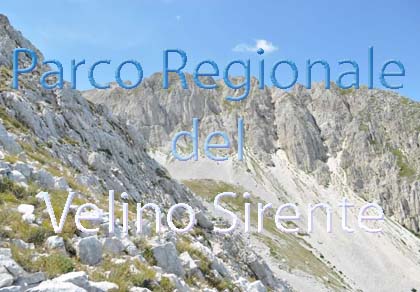
Located in the heart of the Apennines, home to the beautiful villages of the Rocche Plateau
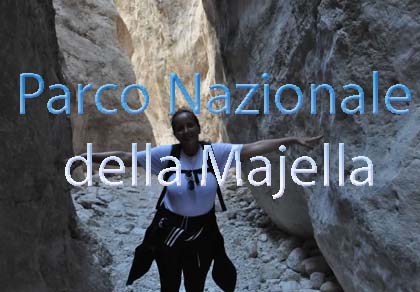
One of the snowiest places in Italy, a unique mountain massif rising close to the sea

Choose between sea or mountains, summer or winter, a sporty holiday or a relaxing one — Abruzzo has it all

Abruzzo is famous for its cuisine, both mountain and coastal, with traditions that vary from area to area
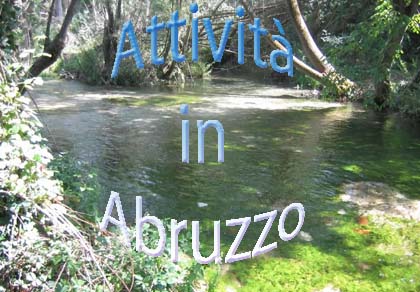
Walks, diving, climbing, mountain biking, horse riding — all outdoor activities available in Abruzzo
In less than 50 km you go from the Adriatic beaches to the 2,912 m of Corno Grande. That is why Abruzzo has so many different climates: here we explain how they work, where rain and snow come from and what to expect in each season.
The climate of Abruzzo depends above all on two things: the Adriatic Sea to the east and the Apennine range, which crosses the region from north to south with the highest massifs of peninsular Italy: Gran Sasso (2,912 m), Majella (2,793 m), Velino (2,486 m), Monti della Laga (2,458 m) and Sirente (2,349 m). The mountains act as a wall: they stop weather systems or let them through depending on the direction they come from.
From the coast up to about 500-600 m, in the provinces of Teramo, Pescara and Chieti. The sea softens the winter and cools the summer with its breeze. Summers are hot and fairly dry; rain falls mostly in autumn and winter. Snow is rare on the coast, more frequent on the hills with outbreaks from the east and north-east.
The basin of L’Aquila, the Valle Peligna with Sulmona, the Fucino plain with Avezzano, the Altopiano delle Rocche and the Navelli plain. Enclosed by mountains and far from the sea, they have a continental climate: cold winters with frequent fog and frost, and summers that are hot by day but cool at night. On clear, still nights cold air slides down the slopes and pools on the valley floor: this is the temperature inversion, which often makes the plain colder than the hills around it.
Above 1,000-1,200 m winter is long and snowy and summer is cool, with frequent afternoon thunderstorms. Above 2,000 m, at Campo Imperatore and on the peaks of the Majella, the climate is alpine: snow can fall in almost any month and snowfields last into summer.
Rain and snow do not fall everywhere in the same way: it all depends on the direction of the wind carrying the weather system. The mountains split the region into a Tyrrhenian side to the west, open to Atlantic fronts, and an Adriatic side to the east, exposed to cold air from the Balkans.
In winter icy air from the Balkans and Russia crosses the Adriatic. Passing over the sea, which is warmer than the air, it picks up moisture and drops snow showers on the coast and above all on the hills of the provinces of Teramo, Pescara and Chieti, then against the eastern slopes of the Monti della Laga, Gran Sasso and Majella, where the accumulations can be huge. These are the situations of the great Adriatic snowfalls, as in February 2012 and January 2017. Beyond the mountains the snow drops off sharply: if the impulse is direct and poorly organised, only a few flakes reach the L’Aquila basin (here is why), while the Valle Peligna, open towards the sea, is more exposed.
With northerly winds cold air flows down the Adriatic. The weather is often windy and clear on the coast, with a few showers; the northern slopes of the Monti della Laga and Gran Sasso, such as Prati di Tivo, get snow, while further south the weather stays dry.
These are the most frequent in autumn and winter. Clouds arrive from the Tyrrhenian Sea and unload on the western slopes: Monti Simbruini, Marsica, the Abruzzo National Park, Velino-Sirente and the L’Aquila side of the Gran Sasso. Here it rains or snows for a long time. On the Adriatic side, sheltered by the mountains, far less rain falls and the garbino often blows: a warm, dry downslope wind that can bring almost spring-like temperatures even in mid-winter.
The sirocco brings humid, mild air from the southern Mediterranean, sometimes with Saharan sand. It rains above all on the slopes facing south-east: the Majella, which gets it more than any inland area, the Monti Frentani, the Alto Sangro and the Abruzzo National Park. At altitude it can snow heavily, but the snow is heavy and wet; lower down it rains and, if it follows a cold spell, the sirocco can melt the snowpack quickly.
In summer rain comes mainly from heat thunderstorms, which form over the mountains in the early afternoon and can bring hail and lightning. They are more frequent over the inland massifs than on the coast: for hikes it is best to set off early and come down by the early afternoon. Before leaving check the forecast and read about mountain safety.
When the wind pushes moist air against a mountain, the air is forced to rise, cools down and its moisture condenses into clouds: on the windward side it rains or snows heavily. This is the Stau effect, from the German for «damming». Once past the ridge, the air descends the other side, warms up and dries out: this is the föhn, which brings clearer skies, dry air and higher temperatures.
In Abruzzo the same mountain can be on the «wet» or the «dry» side depending on the wind. When the wind is very strong, however, snow-laden clouds manage to cross the ridges and keep unloading for a few kilometres beyond the watershed: this is spillover, which explains why Campo di Giove, behind the Majella, gets buried in snow by the bora just like Passo Lanciano.
| Wind | Where it rains or snows most (Stau) | Where it stays drier (föhn) |
|---|---|---|
| East, north-east (bora, Buran) | Hills of Teramo, Pescara and Chieti; eastern slopes of Laga, Gran Sasso and Majella; Valle Peligna up to the Sagittario gorges and Cocullo; by spillover Campo di Giove and, at the foot of the Gran Sasso, Fonte Cerreto and Assergi | L’Aquila basin (with direct, poorly organised impulses), Fucino and Marsica |
| North, north-west (tramontana, mistral) | Northern slopes of Laga and Gran Sasso, Teramo coast | Southern inland areas, Alto Sangro |
| West, south-west (Atlantic fronts) | Simbruini, Marsica, Abruzzo National Park, Velino-Sirente, L’Aquila side of the Gran Sasso, L’Aquila basin | Adriatic coast and hills (garbino) |
| South-east (sirocco) | Majella, Monti Frentani, Alto Sangro, Abruzzo National Park | L’Aquila basin, Teramo side |
L’Aquila is no stranger to cold, but snow arrives there differently from the rest of the region.
The L’Aquila basin is closed to the north-east by the Gran Sasso range, and to the east and south-east by the mountains separating it from the Valle Peligna and the Majella. When the cold outbreak from the east is direct and poorly organised, the snow showers born over the Adriatic all unload on the Teramo and Pescara sides. The Gran Sasso is a high, broad barrier, hard to cross. The air that gets over it then descends into the basin: as it sinks it is compressed, warms slightly and above all dries out, and the clouds dissolve. So while it snows hard in Teramo or on the hills of Chieti, L’Aquila has sunshine or just a few flakes carried over the ridges by the wind: icy, clear, windy days and very cold nights. If instead the impulse from the east is strong and well organised, the snow-laden air manages to cross the Gran Sasso and reach the city, which turns white: it does happen sometimes.
Even for L’Aquila the cold outbreak from the east is still necessary: it is what brings icy air into the basin and leaves it there. Heavy snowfalls arrive when this cold air meets moist air from the west, brought by a front from the Tyrrhenian Sea or by a low-pressure system over central Italy. This creates the so-called cushion effect: the warmer, moister and lighter air slides over the «cushion» of cold air left in the basin, cools as it rises and drops snow all the way down to the city, sometimes for hours and in large amounts. Without the cold cushion, on the other hand, mild Atlantic fronts keep the snow at altitude and it rains in L’Aquila.
In February 2012 the cold lasted for weeks and snowfalls followed one another: in L’Aquila and its hamlets the snow reached depths of close to 2 metres. The photos of those days are on the page The 2012 snowfall in L’Aquila.


What is it like now? See the L’Aquila webcams and the live data from our weather stations at San Sisto, San Gregorio and Scoppito.
It is the massif closest to the sea and the most exposed. With outbreaks from the east and north-east it gets huge snow accumulations on its eastern side, even at medium altitudes, above Pretoro, Fara San Martino and Lama dei Peligni, up to Passo Lanciano and the Majelletta. It is also the area most affected by the sirocco, far more than inland areas: with the south-east wind it rains or snows heavily and the weather changes fast.
Chieti stands on a hill looking at the sea on one side and the Majella on the other. Compared with Pescara, on the coast, it is cooler and more exposed to snow brought by the bora; with the garbino, on the other hand, it can get very warm even in winter. In summer the hills around the city are hot and dry, but the sea breeze and the altitude make evenings cooler than on the coast.
Unlike L’Aquila, Sulmona often gets more snow with outbreaks from the east. The Valle Peligna is connected to the Adriatic through the Pescara valley and the Popoli gorges: cold, moist air can enter from below without having to cross the mountains, and the showers reach the basin. Sulmona also lies right against the Morrone, a narrow barrier far less imposing than the Gran Sasso: it blocks only part of the snowfall coming from the Majella, whereas for L’Aquila the Gran Sasso is a high, broad obstacle, much harder to cross. From the Popoli gorges the cold air is also channelled into the Sagittario gorges as far as Cocullo and, weaker, reaches Pescina, but it often stops before Celano: the Fucino basin almost always stays dry. In winter it is still an inland basin, with very cold nights and fog.
Campo di Giove lies on the western side of the Majella, the «sheltered» side with respect to the bora. Yet with outbreaks from the east it is often buried in snow just like Passo Lanciano, which is on the exposed side. This is spillover: the strong current pushes the snow-laden clouds over the ridges of the Majella, and just beyond them, in the Campo di Giove basin, the snow keeps falling heavily. The same happens at nearby Passo San Leonardo.
Snow in Abruzzo depends not only on altitude but also on exposure to the winds. Here is what to expect, area by area. For today’s conditions see the snow report and the webcams.
Snow is rare and usually short-lived: it comes with cold outbreaks from the east and north-east, when the sea feeds the showers. Some winters it never snows, in others it can fall heavily even on the beaches of Pescara.
The hills of the provinces of Teramo, Pescara and Chieti are among the areas most exposed to snow brought by the bora: already at a few hundred metres of altitude snowfalls can be heavy and block the roads.
With impulses from the east heavy snow reaches the foot of the Gran Sasso, at Fonte Cerreto and Assergi, less so the rest of the L’Aquila basin, which is often sheltered from Adriatic snowfalls, but the cold is intense and whatever snow falls lasts a long time; the Fucino almost always stays dry with outbreaks from the east. Sulmona and the Valle Peligna, open towards the sea, get more snow with outbreaks from the east.
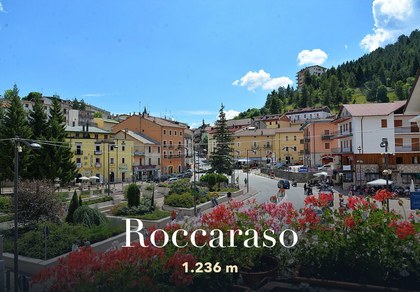
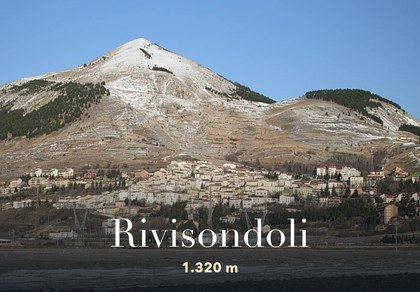
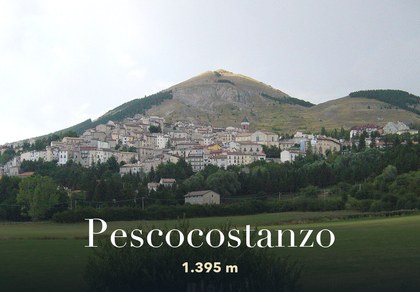
The Alto Sangro (Roccaraso, Rivisondoli, Pescocostanzo), the Altopiano delle Rocche and Campo Felice get snow both with fronts from the west and with the sirocco. Below you will find each resort.
At Campo Imperatore and on the peaks of the Majella snow covers the ground for many months; the wind piles it into cornices and drifts, which are dangerous for avalanches. Before a winter hike check the Meteomont bulletin and read about mountain safety.
Inland basin at over 700 m: cold winters and frequent frost. With direct, poorly organised impulses from the east little snow; heavy snowfalls come when moist air from the west slides over the cold cushion left by the outbreak from the east, as in 2012.
On the hills at the foot of the Monti della Laga and the Gran Sasso: snow comes mainly with currents from the north and north-east.
On the sea: snow is a rare event, linked to the strongest outbreaks from the east.
On the hill between the sea and the Majella: more exposed than Pescara to snow brought by the bora.
Each city has its own climate page. Average snow and temperature values will be published with the official data.
Each ski resort gets its snow from different directions: that is why you can ski perfectly in one while another a few kilometres away has no snow. Today’s lift status is in the snow report; all resorts are in Skiing in Abruzzo.
| Resort | When it snows most |
|---|---|
| Roccaraso, Rivisondoli and Alto Sangro | With fronts from the west and south-west and with the sirocco; with the bora when the current gets over the Majella. |
| Campo Imperatore | With almost every current, thanks to its altitude; strong wind often moves the snow, creating drifts and wind-blown ridges. |
| Prati di Tivo | On the Teramo side of the Gran Sasso: with currents from the north and north-east. |
| Passo Lanciano and Majelletta | On the eastern side of the Majella: with the bora from the east and north-east and with the sirocco. |
| Campo di Giove and Passo San Leonardo | With outbreaks from the east, often as much as Passo Lanciano, by spillover over the ridges of the Majella; also with fronts from the south-west. |
| Campo Felice and Ovindoli | On the Tyrrhenian side: mainly with fronts from the west and south-west; with the bora there is little snow. |
To enjoy the snow without skis: snowshoeing, ski touring and a day in the snow with sledges and children.
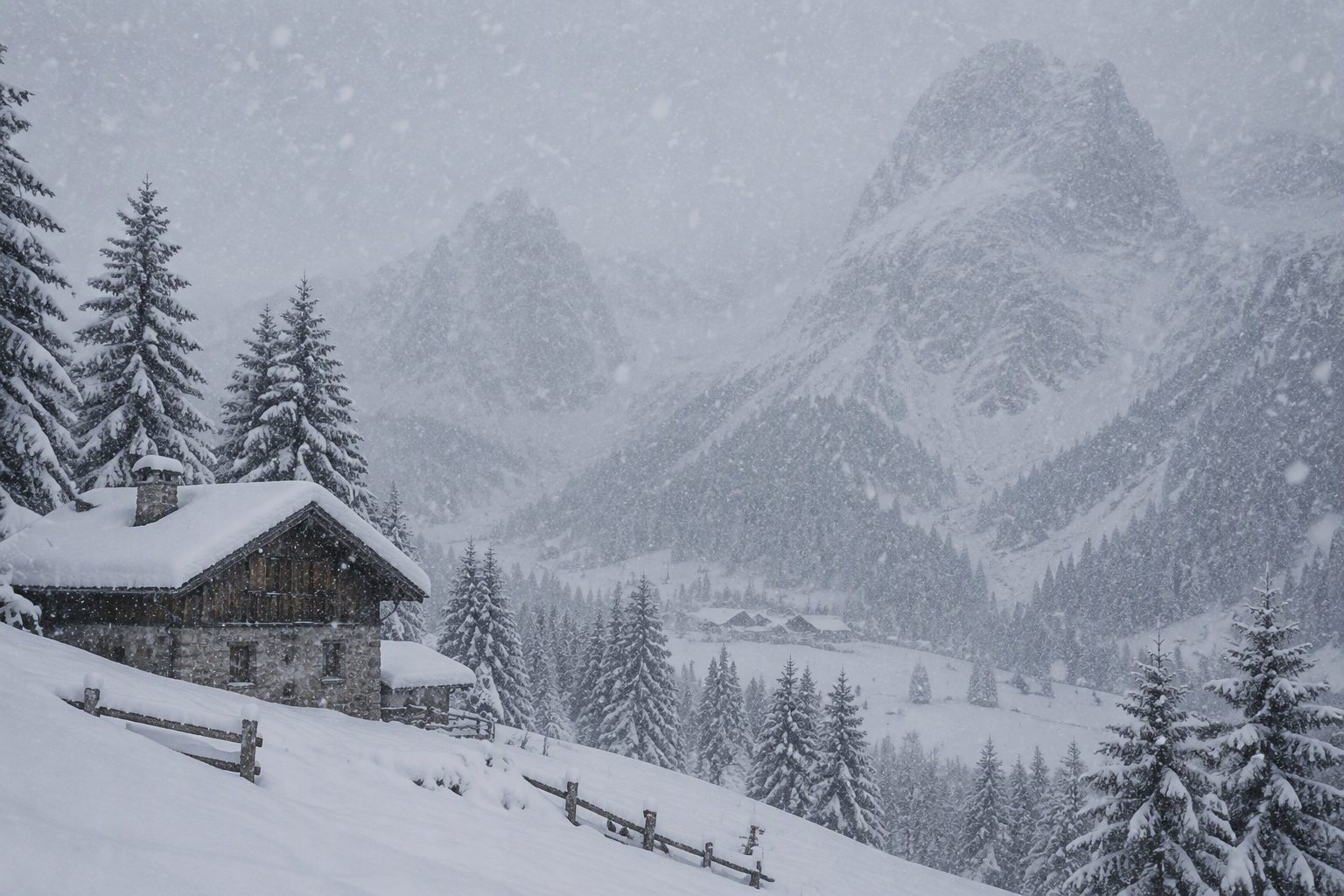
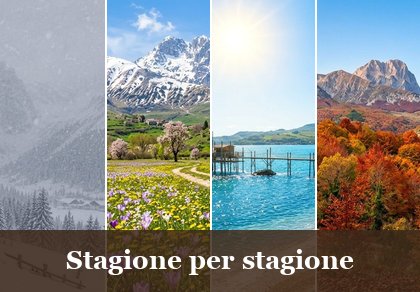
From December to February Atlantic fronts, with rain on the coast and snow in the mountains, alternate with cold outbreaks from the east, with snow down to the hills and sometimes the coast. In the inland basins clear nights are icy and morning fog and hoarfrost are common. It is the season for skiing and snowshoeing: always check the snow report and the avalanche danger.
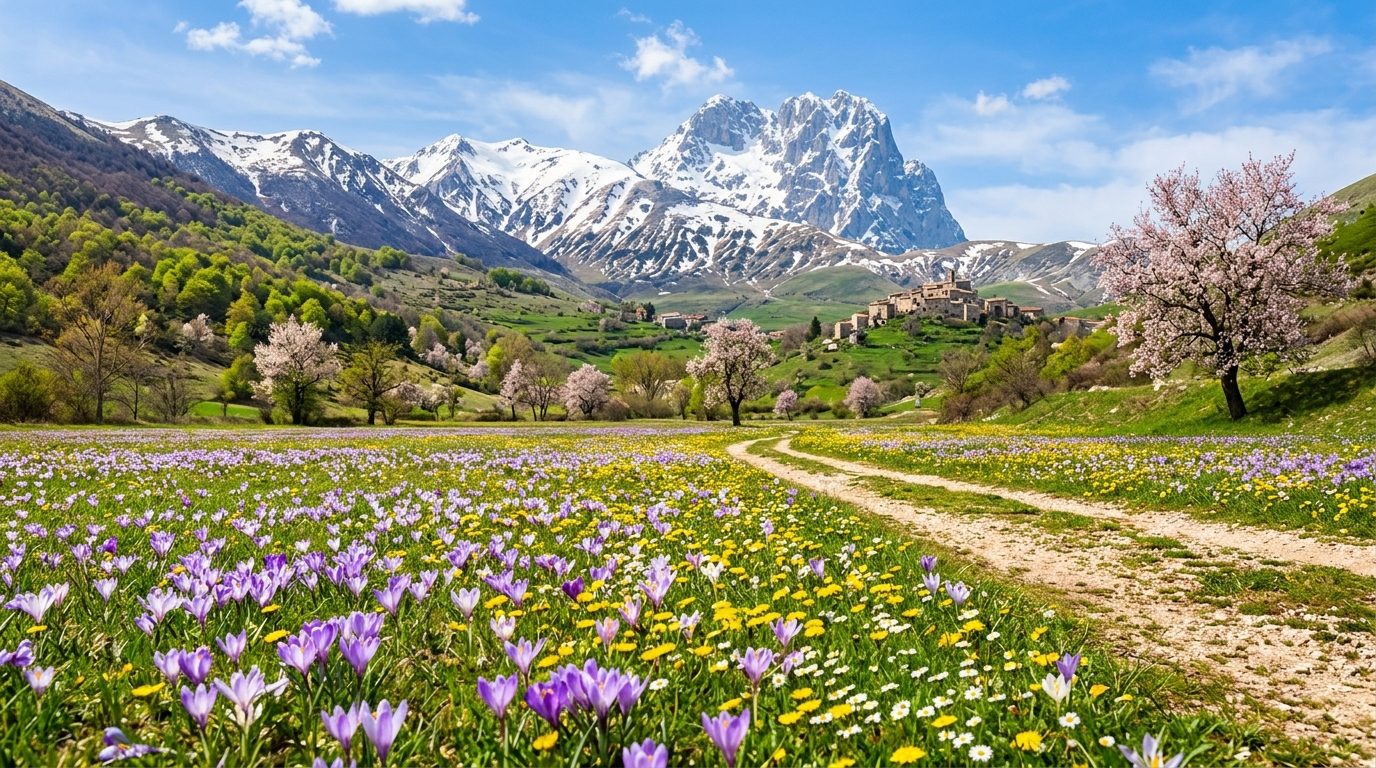
From March to May the weather is changeable: days that are already warm on the coast alternate with cold snaps, with snow in the mountains even in April. In the inland basins late frosts can come until May. At high altitude the snow lasts a long time, while lower down it is the time of blossoms and the first hikes: ideas in Abruzzo season by season.
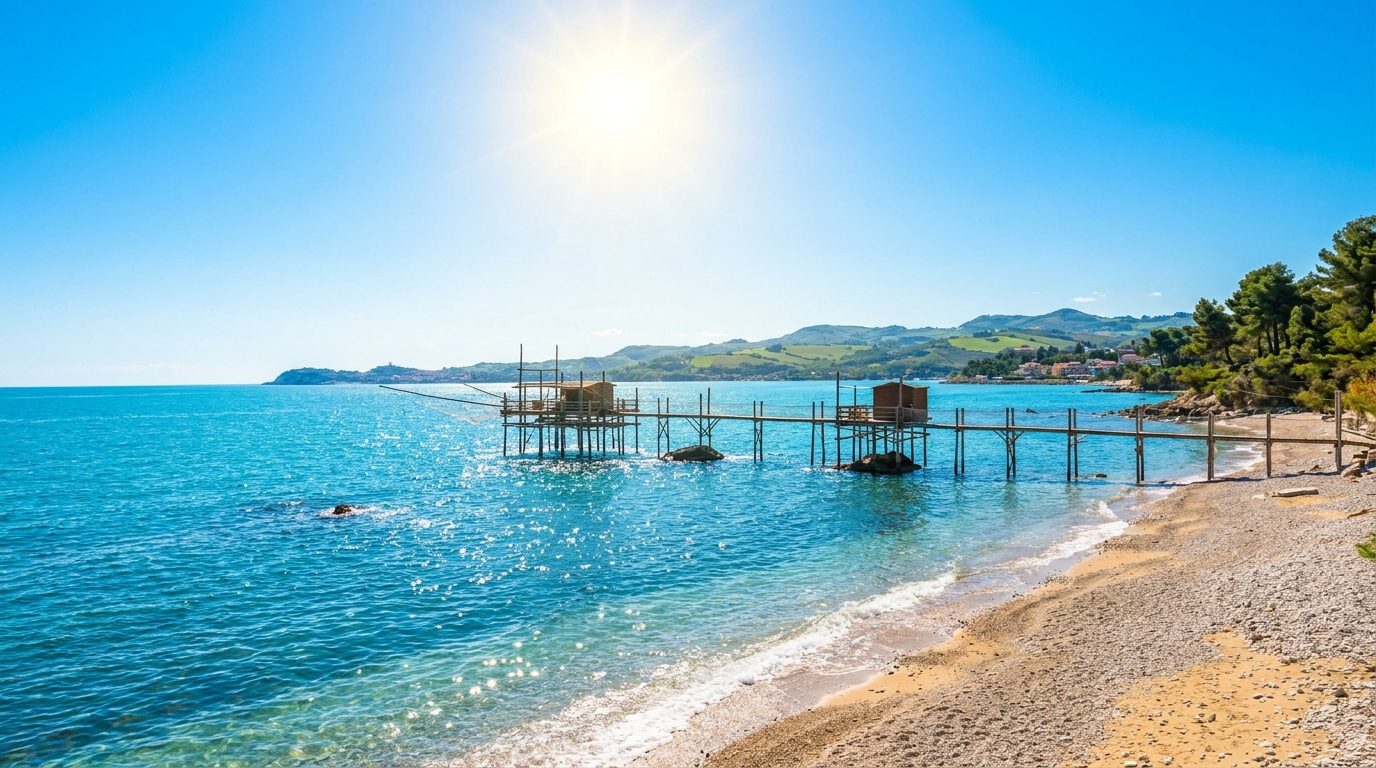
From June to August it is hot on the coast and the hills, with the sea breeze cooling the afternoons; African heatwaves can bring very high temperatures, especially with the garbino. In the mountains days are cool and nights cold, but thunderstorms often form in the afternoon: set off early and come down by early afternoon. For trails see Trekking in Abruzzo.
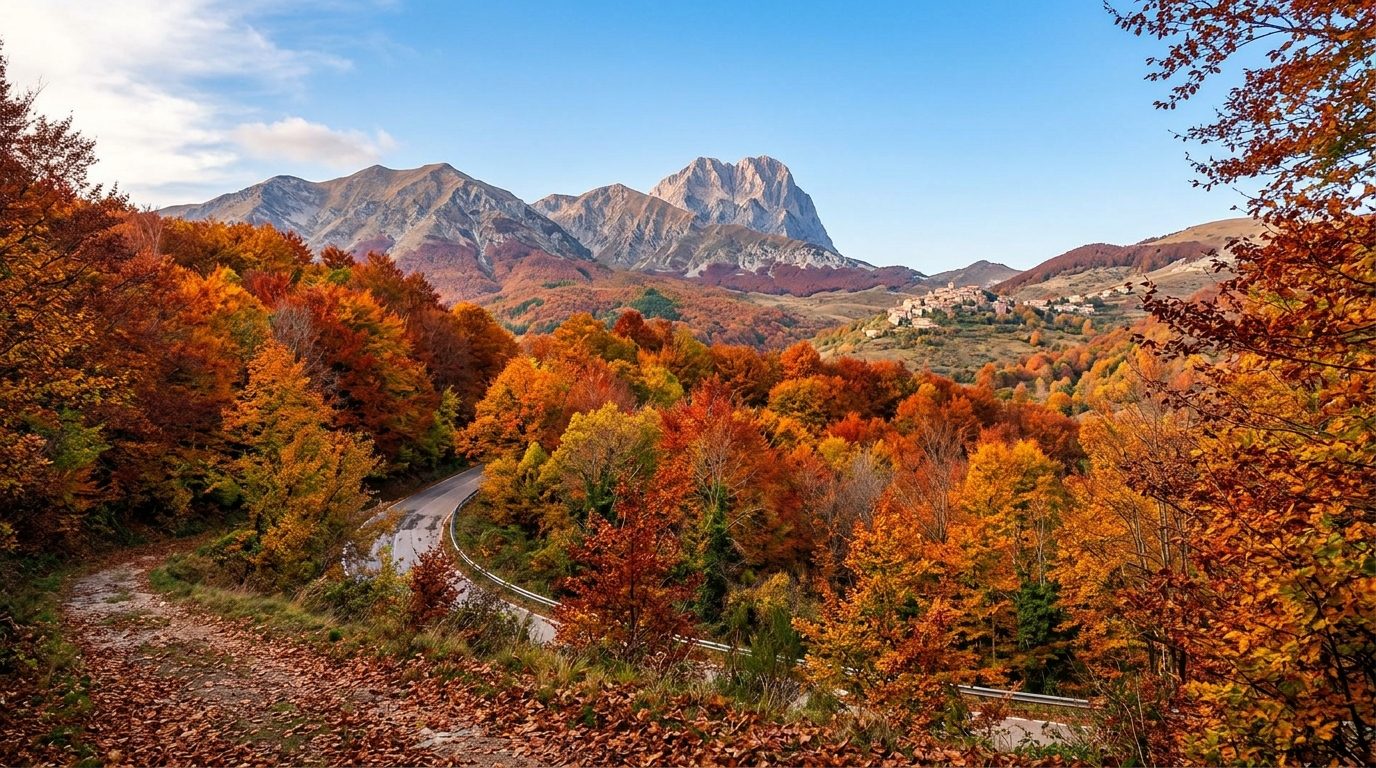
From September to November the Atlantic fronts return: it is the wettest season in most of the region, with episodes of heavy rain even on the coast. The first snowfalls arrive in the mountains, already in October at the highest altitudes. On clear days the beech woods turn yellow and red and fog fills the basins in the morning.
Each park has its own climate, explained on a dedicated page.
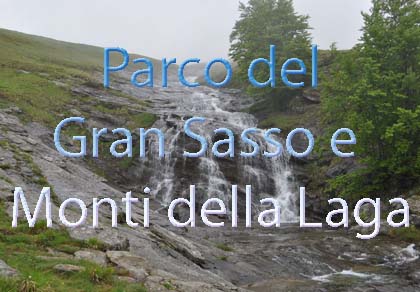
The highest peaks of the Apennines and two very different sides: the Teramo side, exposed to currents from the north and north-east and rich in snow, and the L’Aquila side, drier, with the Campo Imperatore plateau and its almost alpine climate.
The massif closest to the sea: huge snow accumulations with the bora on its eastern side and the area most exposed to the sirocco. The climate of the Majella.
Further inland and far from the Adriatic: it mainly gets fronts from the west and the sirocco, with snowy winters and a more continental climate in the valleys. The villages are in the villages of the park.
Between the L’Aquila basin and the Fucino: plateaus such as the Altopiano delle Rocche and Campo Felice, with strong temperature inversions and very cold nights, and peaks exposed to Atlantic fronts.
Snow report · Skiing in Abruzzo · Snowshoeing · Ski touring · A day in the snow · L’Aquila, the 2012 snowfall
All the webcams in Abruzzo · L’Aquila webcams · the webcams near our weather stations: San Gregorio, San Sisto, Scoppito
San Gregorio, 587 m · San Sisto, 722 m · Scoppito, 845 m · Weather forecast for Abruzzo · 7-day written forecast
This page explains how the climate of Abruzzo works. Average temperature, rainfall and snow values will be added with the 1991-2020 climate normals of ISPRA and the Italian Air Force and with the hydrological yearbooks of the Abruzzo Region. The observations on snow in L’Aquila, Sulmona, Campo di Giove and on the Majella also come from the first-hand experience of the people who run this site.
It depends on the area: on the coast and the hills the climate is mild, with hot summers and temperate winters; in the inland basins, such as L’Aquila and Sulmona, it is continental, with cold winters; in the mountains winters are long and snowy and above 2,000 m the climate is alpine.
It is the heavy rain or snow that falls on the windward side of a mountain: moist air rises, cools and releases its moisture. On the opposite side drier, warmer air comes down: the föhn.
It happens when the outbreak from the east is direct and poorly organised: the basin is sheltered by the Gran Sasso and the mountains towards the Majella, the showers born over the Adriatic unload on the eastern slopes and the air sinking into the basin dries out, so only a few flakes arrive. If the impulse is strong and well organised, the snow-laden air crosses the Gran Sasso and the city turns white. Heavy snowfalls come when, after an outbreak from the east, moist air from the west slides over the cushion of cold air left in the basin: the cushion effect.
In the mountains, especially on the Majella and the eastern slopes of the Gran Sasso and Monti della Laga with outbreaks from the east, and on the Alto Sangro plateaus with fronts from the west and the sirocco. With outbreaks from the east Campo di Giove too, through spillover over the ridges of the Majella, is often buried in snow like Passo Lanciano.
Rarely: snow on the coast comes with the strongest cold outbreaks from the east, when the sea feeds the showers. On the nearby hills, as in Chieti, it snows more often.
It is a south-westerly downslope wind that comes down from the Apennines towards the Adriatic: warm and dry, it can raise temperatures on the coast considerably, even in winter.
From June to September for the sea, hiking and the peaks; in autumn for the colours of the woods and the villages; from December to March for skiing and snowshoeing; in spring for blossoms and low-altitude hikes. In the mountains in summer it is best to avoid the hours of the afternoon thunderstorms.

Rocca di Mezzo, Rocca di Cambio, Rovere, Terranera, Ovindoli

The Medieval Villages of the Gran Sasso, with their castles, towers, and ancient settlements that once dominated Abruzzo

The village of Cappadocia, in the western part of the Aquilan Abruzzo

The village of Casamaina, a favourite among skiers heading to Campo Felice or Ovindoli

The village of Castel del Monte, the highest settlement in the Gran Sasso area

The village of Civitella Alfedena, in the Abruzzo, Lazio and Molise National Park

Mountaineering on the Gran Sasso, the ideal place for freeride lovers seeking demanding routes

The city of L'Aquila, with its restored Renaissance palaces, a place rich in culture

The 2012 snowfall in L'Aquila brought over one metre of snow in 24 hours — unbelievable images

The village of Pescasseroli, heart of the Abruzzo, Lazio and Molise National Park

The village of Pietracamela, on the north-eastern side of the Gran Sasso, at the foot of Corno Piccolo — a magical and unexpected place

Prati di Tivo, a winter ski resort offering breathtaking views to all who visit

San Domenico and the Serpari ritual, held every first Thursday of May

The 2012 snowfall in Scoppito reached nearly two metres in height

The village of Opi, a splendid settlement in the Abruzzo, Lazio and Molise National Park






Punta Aderci, with the Abruzzese trabocchi stretching from Vasto through Fossacesia to San Vito Chietino


Lake Campotosto, nestled between the Gran Sasso and Monti della Laga ranges, within the national park of the same name

The Capodacqua reservoir, with submerged mills and crystal-clear waters, a paradise for divers

The swimming lake of Scanno, named after the village overlooking it — a place worth visiting

Lake Sinizzo, just a few kilometres from San Demetrio, is the ideal place for nature lovers seeking fresh, clear waters

Lake San Domenico, named after the nearby hermitage; its crystal-clear waters make it unique. Swimming not allowed

The Fountain of the 99 Spouts, a symbol of the city of L'Aquila

The Basilica of Santa Maria di Collemaggio, resting place of Pope Celestine V

The Sanctuary of Madonna d'Appari, set among the rocks along the road between Paganica and Assergi

The Church of San Panfilo, in the municipality of Tornimparte, with its frescoes — a place worth visiting

The Stiffe Caves, inside the Velino-Sirente Regional Park — a magical place to explore
The most popular ski resorts, the updated snow report and useful information on how to find lifts or book accommodation for your winter holiday
Vai
View the webcams in Abruzzo and check real‑time weather conditions. Some webcams belong to www.abruzzoparchi.it, others are located throughout the region
Vai
Weather forecasts for the coming days in Abruzzo. Live weather via our webcams and temperatures recorded in several mountain areas
Vai
Maps for trekking, mountain biking, ski touring, running and horse riding. You can also download the GPX track of each route
Vai
Walks, diving, climbing, mountain biking, horse riding — all outdoor activities available in Abruzzo
Vai
Choose between sea or mountains, summer or winter, a sporty holiday or a relaxing one — Abruzzo has it all
Vai
Abruzzo is famous for its cuisine, both mountain and coastal, with traditions that vary from area to area
Vai
Abruzzo’s villages are famous for their fortresses, mountains and the traditional trabocchi along the southern coast
Vai
One of Italy’s most famous and oldest national parks
Vai
One of Italy’s wildest parks, with typical Apennine landscapes and Dolomite‑like peaks
Vai
Located in the heart of the Apennines, home to the beautiful villages of the Rocche Plateau
Vai
One of the snowiest places in Italy, a unique mountain massif rising close to the sea
Vai